Decorating
Layer a Room’s Lighting Around What People Do After Dark
Use ambient, task and accent lighting to support everyday activities without glare, confusing controls or unnecessary fixtures.
The difference between a living room at six and the same room at ten can be a single switch. A broad overhead light helps someone find a dropped button; it may feel too exposed once people sit down for the evening. Layering light means being able to change which parts of a room are illuminated as its uses change. Start with portable lamps and try the room after dark. When the useful positions become obvious, decide which fixtures should be permanent and how many controls a visitor ought to find.
Draw three evening scenes
Make a quick plan and copy it three times. On the first, imagine walking in with a bag and wanting to see the whole room, especially the routes and anything on the floor. On the second, place two people in the room while one reads and the other watches something or talks. On the third, think of hosting dinner or talking with company. Fill in where faces, work surfaces, and doors need enough light. Mark anything that should stay relatively dark, whether it is a television screen, the far bedroom doorway or a picture with glass. No single plan will look much like the other two.
Walk each scene with your existing lights and change their combinations. An older home may have only one main fixture and a power outlet connected to a wall switch. Try the switch with a shaded lamp at the far wall. A shallow living room that cannot accommodate a large floor lamp may gain useful light from a compact table lamp on a known stable surface. Start with positions that preserve the route and keep cords out of the way. A fixture is especially valuable when it does something you need in two scenes, provided it can be made gentle enough for the third or switched off without fumbling.
Give ambient light somewhere to land
Ambient light helps your eyes understand the space. Light reflected off a large pale surface can go a long way, while a heavily textured dark ceiling tends to return less. Try a fixture that sends some light toward a wall or ceiling and examine the effect from the opposite corner. A bare bulb aimed at the ceiling may still appear painfully bright from the top of the stairs or along a sight line from the sofa. Check reflections in dark windows at night. The objective is to make surfaces legible without feeling as though the nearest thing you see is the source itself.
If an overhead fixture provides most of the light, ask how the room looks when it is dimmed or shaded. A fitting aimed straight down can leave big wall areas dim even though the floor is bright. In a small room, two gentle pools may give a much better account of its shape than another high-output lamp. Move the portable lights to different heights and compare shadows around the door and shelves. A very high source may make some textures invisible. A low lamp near a pale wall produces a soft area people can use to orient themselves without lighting the whole room equally.
Put task light beside the person who uses it
Look for tasks you typically perform at night, such as reading, sewing, sorting mail, or laying out food. Put the task light close enough to move with the job. A reading lamp should light the page without creating a bright field around it or sending the rest of the room a direct glare. Try it to one side or slightly behind your shoulder. If you draw or write, move the source to the side that puts the smallest shadow where your work is. A desk has to handle hands, paper and displays. Pick the usual screen position and check for reflections from normal seated angles. Adjust the lamp or the screen experimentally before installing either one permanently.
A kitchen may need a continuous working band where someone standing at the counter can see their hands. Existing ceiling lights positioned behind a person can leave their work in shadow. Ask about a well-shielded under-cabinet source placed to avoid glare from seated views. Try temporary fixtures safely in the dry conditions and positions they are designed for. Look at the surface below and inspect reflected spots from stone or glass. A strong but directional source can simplify cooking when it is used and leave a comfortable background for dinner once a separate switch goes off. Confirm suitable installation and fixture selection around damp, hot, or other special areas.
Add accent light only where it improves a scene
Accent light tells people where to look. It can give a textured wall depth or make a piece of art visible from across the room. Choose something you enjoy looking at even when it is unlit. With a portable adjustable lamp, try several angles so texture is visible without producing shadows so large that they look like defects. Check any fixture near art against the object's care requirements, especially if light or heat can damage the material. A glass-covered picture can reflect a very small source straight across the room. View it from your seat and from the doorway before positioning a fixed fitting.
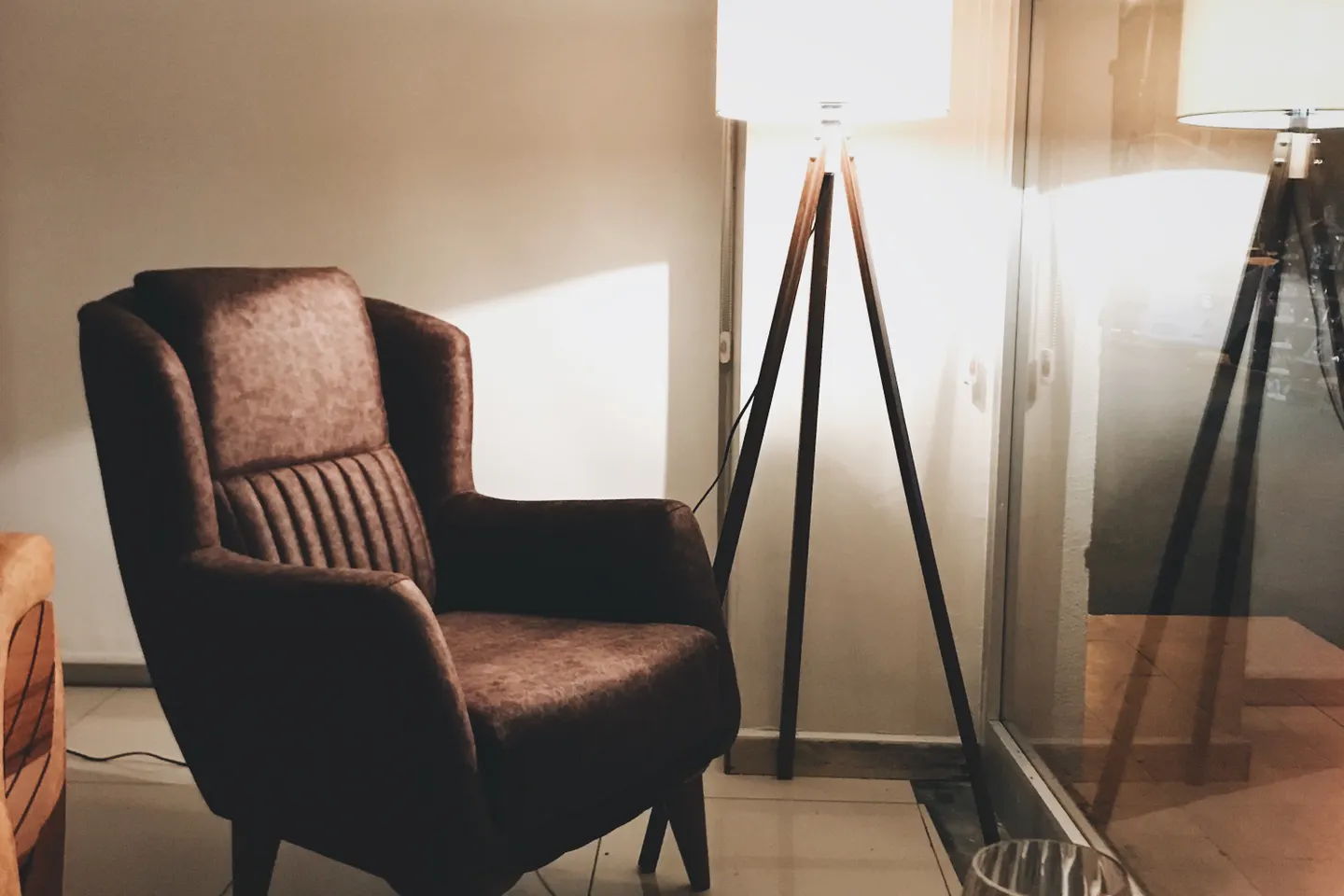
Plants, books and texture often benefit from softer light across a wall than from a precise hotspot. Try a light behind an armchair directed toward the wall or a protected fixture on a shelf. Make sure it is intended for its position, that ventilation clearances are maintained, and that the cord is accessible. A tight niche with equipment in it must be handled as the equipment specifies. When the same wall can already be seen clearly in every scene, move the accent lamp to a temporary position and see if you notice its absence. Light that adds visual interest only when every other fixture is off can still be valuable as part of a quiet evening setup.
Compare bulbs by output, hue and fit
Read lumens for the amount of light the lamp emits. Wattage is a measure of power, and the two should not be confused. As a practical reference, the U.S. Department of Energy's lighting guidance explains both light output and correlated color temperature. Lower Kelvin ratings typically describe warmer-looking whites. Sample the intended lamps with the main wall and fabric colors in the room. Two different products at the same color temperature can still render surfaces differently. Use this comparison on important features such as the color of a painted wall or the fabric next to a window, and pick bulbs that fit the fixture and its rated limits.
Brightness on a package will not tell you how light travels after a shade is put over the bulb. A narrow beam aimed at a surface may create a light patch that looks much brighter than a broad fixture with higher total output. Establish the useful distribution before increasing output. See whether a shade hides the bulb at seated and standing heights. Choose compatible dimmers and lamps when using dimming, and use well-suited fixtures and bulbs in enclosed or special locations. Ask a qualified electrician about permanent electrical work. Record the exact lamp designation where replacing it with a similar-looking product would change the color or beam.
Decide how many switches people can find
The first useful switch should be near the route where people enter, or otherwise immediately reachable. A reader should be able to operate their own light, and a lamp over a worktop should have a separate control when extra light would disrupt dinner. Mark these places on a plan. Then see how many actions it takes to reach each scene. If visitors would have to find five switches in a new room to settle in, simplify the control arrangement. A main lamp on an accessible switch and a pair of separately controlled portable lights may serve all evening uses perfectly well.
If you use smart controls, test the setup after normal power interruptions in accordance with the product instructions, and give a visitor a simple way to operate the main fixtures. A room that requires a special phone to find the light switch can be awkward for guests and household members with different preferences. Check whether individual fixtures remember their state and discuss how that behavior would feel in a bedroom seen from the sitting room. Decide which settings people frequently change and which can be grouped. A comfortable default has more everyday use than a long list of dramatic combinations.
Leave the successful experiments in place for a week
Before wiring new fixtures or ordering a matching set, run the lamps you already own in the winning positions. Walk from a brighter room into the new setup and notice the time it takes to see unfamiliar edges. Ask a reader whether the text is clear after twenty minutes. Check reflections again on a rainy night. Allow the trial long enough to find the switch you forget, the lamp someone moves back, and the surprising small light that everybody wants to leave on.
Keep one image of each working scene and a list of the sources and controls used in it. If a new fixture promises to replace two portable lights, check that the same parts of the room will still be illuminated from useful angles. Preserve the spot that kept the page clear and the gentle surface that helped people see the entrance. Once those everyday needs are met, the light can be as simple as the room itself.